
AI Search Visibility for Consultants
Looking for an AI Search Visibility consultant? I help independent consultants and consulting firms improve how AI systems understand, describe and cite their expertise in ChatGPT, Google AI Overviews and other answer platforms.
My AI Search Visibility consulting starts with evidence: commercial prompts, website and entity signals, competitor context and the proof a buyer needs to verify.
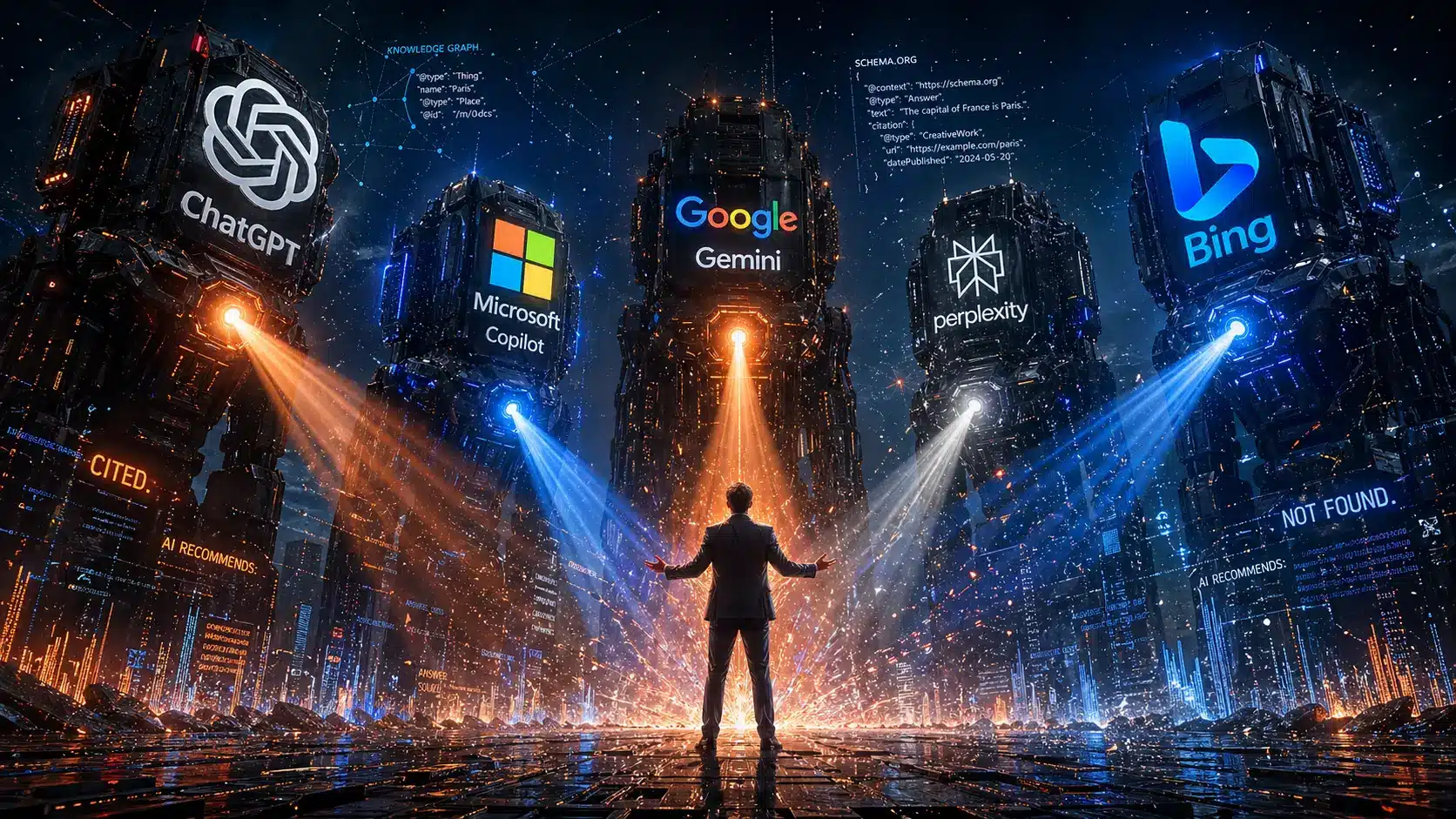
What Does AI Search Visibility Mean for Consultants?
AI Search Visibility for consultants means appearing accurately inside AI-generated answers when potential clients ask about experts, advisory services, methodologies, comparisons or solutions.
Visibility may take the form of a direct name mention, an accurate description of the consultant’s expertise, inclusion in a shortlist, comparison with other advisors, recommendation for a specific use case or citation of the consultant’s content.
The objective is not only to make content extractable. It is to make the consultant’s identity, services, proof and subject expertise clear enough to be interpreted consistently across the web.
Why AI Visibility Matters for Consultants
Consulting is an expertise-led purchase. Buyers often need to understand who the consultant helps, what problems they solve and why they should be trusted before making contact.
Expert discovery
Potential clients may ask AI systems to identify specialists for a problem, industry or growth stage.
Shortlisting
Consultants can be compared before a buyer visits individual websites or LinkedIn profiles.
Authority evaluation
Frameworks, case evidence, credentials and published expertise help buyers evaluate credibility.
Service understanding
Accurate visibility helps prevent the consultant from being placed in the wrong category or use case.
AI Search Visibility for Yacht Brokers
I would treat yacht-broker visibility as a high-consideration discovery problem, not a generic local SEO task. Buyers and their advisers may start with comparative questions about brokerage services, yacht types, destinations, transactions or the professional who can handle a specific need. If AI-generated answers cannot clearly connect a brokerage to its services, market focus, expertise and supporting evidence, it may not enter that early consideration set.
For yacht brokers, I would focus on precise service pages, clear broker and company identities, factual destination and vessel expertise, and evidence that supports the claims a buyer needs to verify. I would not promise inclusion in any AI answer. The practical goal is to make the brokerage easier for search systems to understand, validate and cite when the query is relevant.
Why Experienced Consultants Can Remain Invisible
Strong experience does not automatically create a clear digital entity or a retrieval-ready body of evidence.
Generic positioning
The website uses broad terms such as strategy, growth or transformation without defining a specific problem, audience or outcome.
Weak founder identity
The consultant’s name, biography, role and relationship with the firm are inconsistent or poorly connected.
Thin service pages
Services are listed briefly but not explained through problems, use cases, process, scope and proof.
Unsupported expertise claims
The site claims authority without case evidence, credentials, frameworks, outcomes or relevant external references.
Disconnected thought leadership
Articles cover broad topics but do not connect clearly with the consultant’s offers, methodology or target clients.
Commercial prompt gaps
The consultant may appear for general information but not for comparison, recommendation or hiring questions.
The Pages and Proof Signals Consultants Need
A consultant’s website should provide a connected evidence system rather than a collection of disconnected pages.
Clear About page
Defines the consultant’s identity, background, role, expertise and relationship with the business.
Specific service pages
Explain who each service is for, which problem it solves, what is included and what the next step is.
Named methodology
A clearly explained framework can connect the consultant’s expertise with a consistent problem-solving approach.
Case evidence
Case studies, examples and outcomes support expertise claims when they are accurate and properly contextualised.
Author-led content
Guides and analyses should connect the author, topic and service rather than appear as anonymous SEO content.
Consistent external profiles
LinkedIn, directories, interviews, podcasts and professional profiles should reinforce the same identity and specialisation.
Which AI Prompts Should Consultants Test?
Direct name searches show recognition. Commercial and category prompts show whether the consultant is discoverable before the buyer already knows the brand.
Brand prompts
Who is [consultant name]? What does [firm] specialise in?
Category prompts
Who helps [audience] solve [specific problem]?
Comparison prompts
Compare consultants or advisory approaches for a defined use case.
Commercial prompts
Best consultant, advisor or firm for a location, industry, challenge or project stage.
Measurement rule: record visibility separately by platform and prompt type. A strong result for direct brand prompts does not prove discoverability for unbranded commercial questions.
How SETC Applies to Consultants
Ranknizer uses SETC to evaluate the website and entity conditions behind weak consultant visibility.
SETC is a diagnostic framework. It does not guarantee mentions or reproduce the private ranking systems of AI platforms.
Structured Data Quality
Checks whether the consultant, organisation, services, authorship and page relationships are represented accurately.
Entity Recognition
Checks whether the consultant’s name, role, firm, niche, audience and expertise remain consistent across sources.
Topical Authority Signals
Checks whether the site provides connected coverage around the consultant’s services, frameworks and buyer questions.
Citation Readiness
Checks whether expertise claims, methods, examples and business information are specific and supportable.
How Consultants Can Improve AI Search Visibility
Establish a baseline
Test brand, category, comparison and commercial prompts across the platforms most relevant to the target clients.
Clarify positioning
Define the audience, problem, service category, methodology and use cases in consistent language.
Strengthen founder and firm entities
Connect the consultant’s biography, role, profiles, credentials and business relationships accurately.
Build clear page ownership
Assign one page to each main service, methodology, audience and commercial intent.
Add useful proof
Support claims with case evidence, examples, credentials, frameworks and relevant external references.
Improve retrieval-friendly structure
Use direct definitions, precise headings, service details, comparisons, FAQs and clear internal links.
Retest and compare
Measure later results against the same core prompt set and selected competitors.
For the general improvement methodology, read how to improve brand visibility in AI search engines.
SEO, AEO, GEO and AI Search Visibility for Consultants
| Discipline | Main Objective | Consultant Application | Common Measurement |
|---|---|---|---|
| SEO | Improve page visibility in search results. | Service rankings, thought leadership and organic discovery. | Rankings, impressions, clicks and traffic. |
| AEO | Make direct answers easier to identify and reuse. | Definitions, FAQs, service explanations and concise expert answers. | Answer inclusion, snippets and answer coverage. |
| GEO | Improve how generative systems understand and use content. | Entity clarity, topic coverage, source support and retrieval-ready pages. | Mentions, citations, accuracy and prompt coverage. |
| AI Search Visibility | Improve overall presence inside AI-generated answers. | Connects SEO, AEO, GEO, entity work, evidence and measurement. | Brand mentions, citations, competitor share and commercial prompt visibility. |
How Ranknizer Helps Consultants
Start with a free snapshot, use the manual audit for deeper diagnosis, request strategic advice or move into custom implementation.
Free Brand Check
See how ChatGPT currently identifies and describes the consultant or firm.
$99 Manual Audit
Includes 10 commercial prompts, ChatGPT, Google AI Overviews, two competitors, a PDF and spreadsheet.
$150 Consultation
A focused 25-minute Zoom session for strategic advice on priorities, audit findings or implementation scope.
Custom Implementation
Support for entity clarity, service architecture, content structure, internal linking, schema and citation readiness.
Related: Explore the AI Search Visibility consultant service and compare pricing and engagement options.
AI Search Visibility for Consultants FAQs
What is AI Search Visibility for consultants?
AI Search Visibility for consultants is the ability of an independent expert or consulting firm to be discovered, correctly understood, mentioned and cited inside AI-generated answers for relevant expertise, service and recommendation questions.
Why might an experienced consultant be missing from AI answers?
Common causes include generic positioning, weak founder identity, thin service pages, inconsistent external profiles, unsupported expertise claims and limited coverage of commercial buyer questions.
Which pages are most important for consultant AI visibility?
The most important pages usually include a clear About page, specific service pages, methodology or framework pages, case evidence, author-led guides and contact or conversion pages.
Does schema guarantee AI mentions for consultants?
No. Accurate schema can help machines understand the consultant, organisation, services and authorship relationships, but it does not guarantee mentions, citations or recommendations.
Should consultants focus only on direct brand-name prompts?
No. Brand prompts measure recognition, while category, comparison and commercial prompts measure whether the consultant can be discovered before the buyer already knows the name.
What proof supports consultant AI visibility?
Useful proof can include accurate case studies, examples, credentials, named methodologies, published expertise, trusted profiles, interviews and third-party references.
How is consultant AI visibility measured?
It can be measured through a defined prompt set using metrics such as mention rate, citation rate, answer accuracy, prompt coverage, competitor share and commercial prompt visibility.
How long does improvement take?
There is no universal timeline. Website and entity corrections can be completed quickly, but changes in AI outputs vary by platform, source access and the strength of the consultant’s existing digital footprint.
Can Ranknizer work with a consultant’s existing website team?
Yes. Ranknizer can provide diagnosis and strategic recommendations while an internal team, developer, SEO provider or content partner completes the implementation.
Where should a consultant start?
Start with a free brand or website snapshot. Use the $99 manual audit when deeper prompt testing, competitor comparison and prioritised recommendations are required.
Consultant Visibility Depends on Clarity, Proof and Commercial Relevance
Consultants improve AI visibility by making their identity, services, expertise, methodology and evidence easy to understand and consistently connected to the questions potential clients ask.